Solar and diesel hybrid systems for factories
In short
A solar-diesel hybrid system puts PV and battery storage in front of your existing generator: PV carries the daytime load, the battery carries short peaks and outages, and the generator runs only for long outages or sustained loads above the PV-plus-battery capability. On most industrial sites this cuts generator hours substantially — but not always enough to pay for the battery. The test is your generator's fuel consumption and running hours, which you can check against the arithmetic below.
The short answer
If your generator runs more than a few hours a day, and your daytime load is steady enough for PV to carry it, a hybrid usually pays back through fuel alone. If the generator only covers rare, brief outages, storage added just to avoid those outages rarely pays for itself — a smaller battery for the transfer gap, or nothing at all, is the better answer.
How the three sources divide the load
| Source | What it carries | Why not more |
|---|---|---|
| PV | Daytime load, up to what the roof or land area allows | Produces nothing at the evening peak, which is where many factories bill their demand maximum |
| Battery | Short peaks, the grid-failure-to-generator-start gap, and outages shorter than the economic storage window | Energy stored is finite and expensive; long outages are a generator job |
| Generator | Long outages, sustained overload, and battery charging during multi-day cloudy periods | Fuel is the most expensive energy on site — every hour it does not run is money kept |
How to read this table: the generator's new job is reserve, not baseload. The hybrid control decides the split every second; your job at design stage is to decide where the boundaries sit.
How this is calculated, and what we assume
The fuel side is simple enough to check yourself. A diesel generator at a reasonable load level consumes roughly 0.28–0.35 litres per kWh produced, plus consumables. So:
Generator cost per kWh ≈ fuel consumption (L/kWh) × diesel price per litre + maintenance per kWh.
Worked example, with every assumption flagged:
| Parameter | Value used | Status |
|---|---|---|
| Fuel consumption at typical load | 0.30 L/kWh | Assumption — mid-size genset at 50–80% load; check your genset datasheet |
| Diesel price | US$0.90 per litre | Assumption — use your delivered price, not the pump price |
| Lubricants, filters, service | US$0.03 per kWh | Assumption — typical range for this genset class |
| Generator cost per kWh | 0.30 × 0.90 + 0.03 = US$0.30 | Derived |
The solar-plus-storage side of the comparison is project-specific: it depends on irradiance at your site, the PV area available, the load shape, and how much of the generator's running time the battery can actually displace. We calculate it against your load profile and show the assumptions — the same discipline as our sizing method. What the arithmetic above already tells you is the number to beat: every kWh the hybrid takes away from the generator saves roughly the figure your own datasheet and fuel price produce.
Project evidence
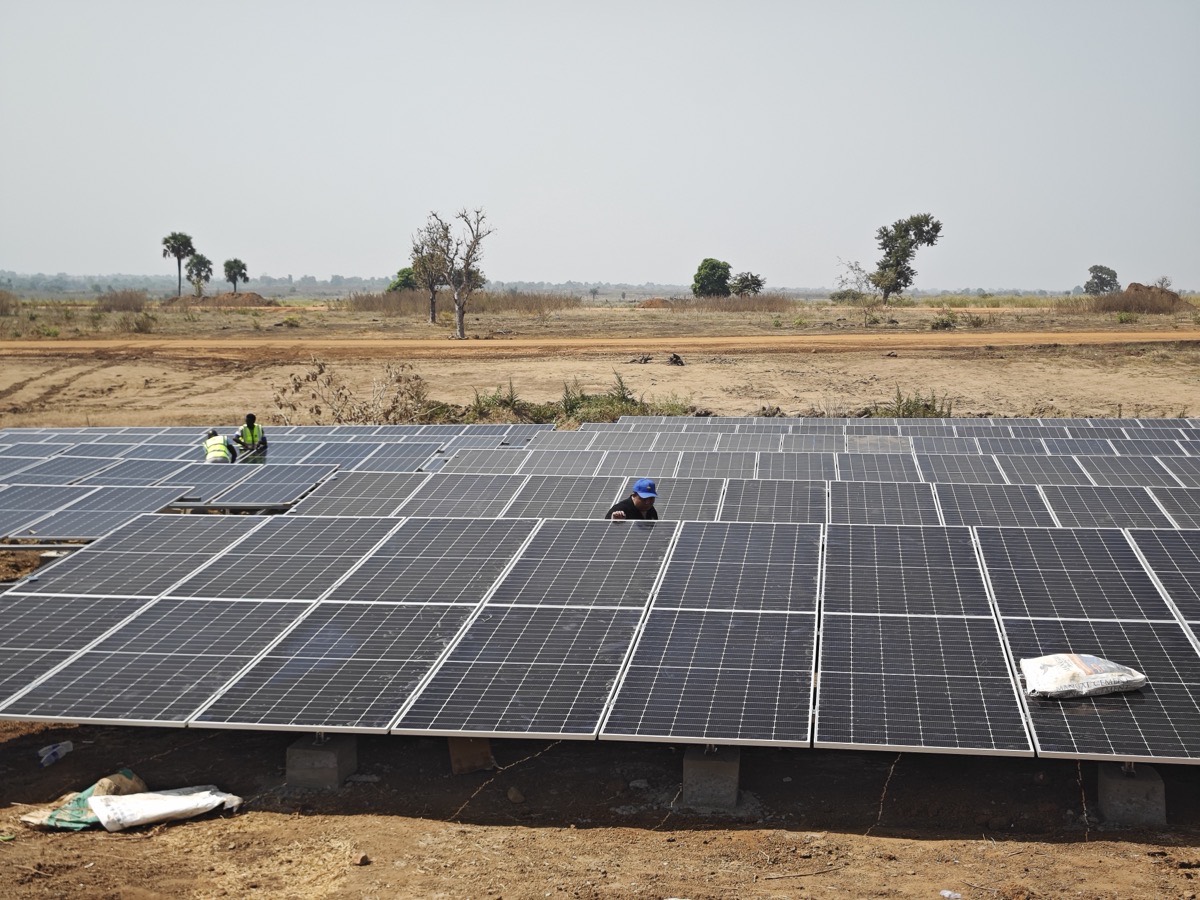
Hybrid configurations have been designed and supplied into West Africa and Southeast Asia. Anonymised references — region, scenario, configuration and delivery status — are listed on the configuration page; client identities and measured results join the table wherever the customer has approved disclosure.
When a hybrid is not the right choice
- The grid is reliable and cheap, and outages are rare and short: a grid-tied PV system without storage captures most of the savings at a fraction of the cost. Do not buy a battery to solve a problem you do not have.
- The generator is already running fewer than one or two hours a day: there is not enough fuel saving left to repay the battery.
- The site cannot carry enough PV to offset a meaningful share of the daytime load: hybrid controls still work, but the economics thin out quickly.
- Nobody on site can service the generator or the hybrid controller: a hybrid adds a control layer, and an unmaintained one fails in a way plain diesel does not.
Next step
Send the generator rating, its monthly running hours, and your fuel price. Those three numbers plus twelve months of bills are enough for a first-pass hybrid assessment — and they are the same documents your finance team will ask to see.