Solar and battery systems for factories
In short
A factory system is sized on peak demand and motor starting current first, and battery capacity second. The common failure is a system sized on monthly kWh: it looks correct on paper, then trips on compressor start. Send a load schedule with continuous kW, peak kW, starting current and shift pattern, and the configuration follows from those four numbers.
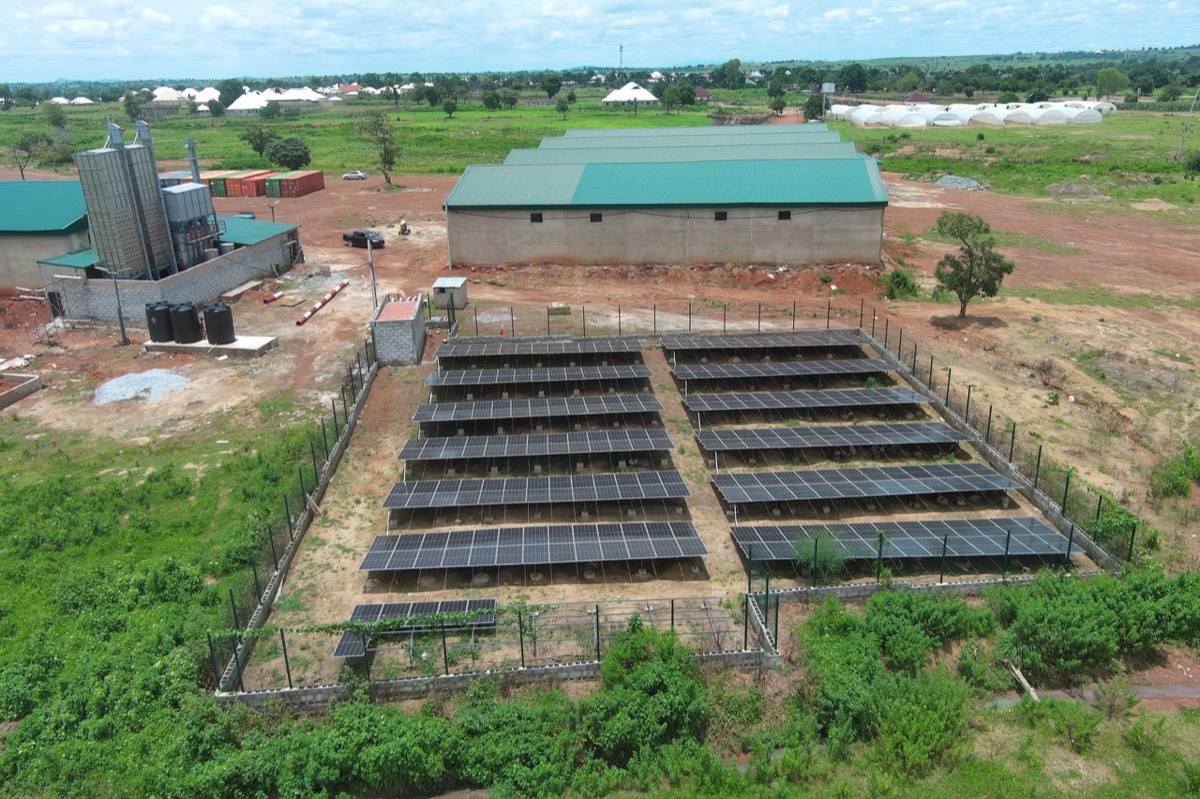
Why factories are the hardest to size
Three loads behave badly together. Motors draw several times rated current for a fraction of a second at start. Shift changes move the load from low to high within minutes. And demand-based tariffs charge for the highest 15- or 30-minute average in the month, which rewards smoothing far more than it rewards generation.
A system that only generates will reduce kWh. A system with storage can also reduce the demand peak, and on many industrial tariffs that is where the money is. Those are two different designs, and confusing them is the most common specification error we see in tender documents.
How the load shape changes the configuration
| Load characteristic | What it drives | What we need from you |
|---|---|---|
| Highest 15-min average demand | Converter rating, and whether peak shaving is viable | Interval data from the meter, or a week of logged readings |
| Largest motor starting current | Converter overload capability, or soft-start requirement | Motor list with kW, start method, and whether VFD-fitted |
| Shift pattern | How much PV is self-consumed versus exported | Operating hours per day and days per week |
| Loads that must survive an outage | Backup circuits and battery capacity | Critical load list, with kW for each circuit |
| Roof or ground area available | PV capacity ceiling | Usable area, orientation, shading, roof load limit |
What a factory configuration usually looks like
Most industrial projects we assess fall into a small number of shapes. The reference configurations below are starting points; the final capacity is set from your load schedule, not from a catalogue.
- Single-shift factory, 60–100 kW peak: PV covering daytime base load, storage for demand shaving and critical circuits during outages.
- Two-shift factory with large compressors: converter sized on starting current, storage for peak shaving; PV limited by roof area rather than by demand.
- Continuous process with high outage cost: storage sized on outage duration first, PV sized on daytime consumption second.
Cold storage and food processing
Cold storage behaves like a factory with one difference: the failure mode is inventory, not downtime. A four-hour outage in a blast freezer is a product loss, and that changes how the system is sized — outage duration becomes the design input, and PV capacity becomes secondary.
| Characteristic | Effect on the configuration |
|---|---|
| Compressor starting current | Often the binding constraint on converter sizing, more than the running load |
| Continuous 24-hour load | PV covers daytime only; storage or grid carries the night |
| Narrow temperature tolerance | Backup must cover the full cooling load, not a reduced "critical" subset |
| Staged expansion | Design the converter and busbar for the future room, not only the current one |
Two inputs decide the outcome: the longest outage the product can survive, and the starting current of the largest compressor. Send both and the sizing follows; send only the monthly bill and the result is a guess.
When this is the wrong solution
| Situation | Why a standard configuration fails | What to consider instead |
|---|---|---|
| Continuous load above the converter rating | A hybrid system cannot carry it; the design needs a bypass or generator-supported path | Larger converter, or a grid-tied design with generator support |
| Starting current above the converter overload window | Compressor or crusher start trips the system | Soft starters or VFDs, then re-size |
| Outage requirement longer than the practical storage window | Battery cost grows faster than the value it protects | Hybrid with generator, rather than storage alone |
| No usable roof or land area | PV cannot be added at the required capacity | Storage-only peak shaving, or a ground-mount option |
Next step
Send the load schedule and one week of interval data if you have it. If you do not, send the motor list and shift pattern — we will tell you what is still missing rather than size on assumptions.
Request a System Proposal